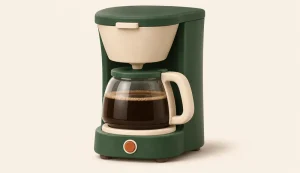

















Coffee maker deals for one mug, a household or a shared kitchen
The most useful coffee maker is often the one that prepares the right amount without making the morning complicated. A manual dripper can suit a single mug; an automatic batch brewer can serve several people. A press pot provides another style of preparation and cleanup. This page compares coffee maker deals through those everyday decisions, helping separate a suitable brewer from an impressive-looking purchase that does not fit the household.
What a stated cup count really means
Do not assume that a manufacturer’s “cup” equals the mug in the cupboard. Check capacity in millilitres, litres or fluid ounces. Moccamaster’s thermal carafe is described as 1.25 litres, giving a more concrete comparison than a cup count alone. Divide the usable batch by the actual serving size to estimate how many people it will serve.
Maximum capacity also differs from the amount a machine handles well in its ordinary programme. If coffee is usually made for one person, investigate the small-batch instructions instead of buying solely for occasional guests. A larger brewer can occupy more space and require more coffee than expected when used outside its intended range.
Compare the way water meets coffee
| Brewer family | What the user does | Useful shopping question |
|---|---|---|
| Manual pour-over | Controls the water addition through a filter. | Which filter shape and size are required? |
| Automatic drip | Measures coffee and water, then selects the programme. | How is the batch held and served afterward? |
| Immersion press | Steeps coffee before separating the grounds. | How easily can the filter and vessel be cleaned? |
| Portable manual brewer | Prepares a small drink with a dedicated process. | What cup, filter and hot-water source are needed? |
These are workflow descriptions, not a ranking of flavor quality. A hands-on drinker may enjoy a controlled pour. A shared office may benefit more from a straightforward batch brewer with an accessible carafe. A device that fits one routine can be inconvenient in the other.
Filters are part of the purchase
A brewer can require a particular paper shape, filter size or reusable component. CHEMEX’s official getting-started information identifies its bonded filters as part of the brewing setup. HARIO likewise offers different filter sizes across its range. Check ongoing availability and whether the package includes an initial supply. A brewer-only sale and a ready-to-brew bundle are not the same purchase.
Reusable filters change cleaning requirements and can affect the style of the finished drink. They are not automatically an exact replacement for the original paper filter. Follow the maker’s compatibility instructions. For replacement carafes, compare the complete model name; a vessel that looks similar can still have a different fit or lid mechanism.
A coffee maker’s pause control deserves a separate check from its serving capacity. On the Moccamaster KBT, a manual-adjust basket controls or stops flow into the carafe. That feature calls for a different routine from an automatic drip-stop. Read how the selected model works before assuming every brewer can be interrupted in the same way. Compare separate brewing tools when planning the setup.
Holding coffee and cleaning up afterward
A glass carafe with a warming arrangement and a thermal carafe solve serving differently. Consider whether the coffee will be poured immediately or shared over time. Check the lid, pouring action and cleaning access. A narrow opening or an awkward filter basket can become more significant after repeated use than a rarely used digital setting.
Leave space to remove the water tank, lift lids and carry the carafe. A coffee maker that fits under a cabinet when closed may be awkward to refill there. Follow the manufacturer’s cleaning and descaling instructions, including its requirements for materials and products. Maintenance is part of ownership rather than an optional feature hidden after the sale.
Three sensible ways to judge a coffee maker offer
For a first setup, compare the brewer together with its required filters and any separate kettle or grinder. For a replacement, check whether existing accessories remain compatible with the new model. For a gift, confirm the recipient’s preferred batch size and how much manual preparation they enjoy. Those three situations can justify very different purchases at the same budget.
Read coupon conditions at the selected product level. A store listed in this category may also sell beans, espresso equipment and accessories; its coffee-only code may exclude hardware. Sale pricing can also apply to one model or color. Confirm the actual basket total and delivery costs rather than assuming that every promotion shown at the store covers every brewer.
Common coffee maker decisions
Is a coffee maker with more programmes necessarily more useful?
No. The useful programmes are those that fit the drinks and batch sizes normally prepared. Simple controls and accessible cleaning can matter more than a large menu.
Does a manual dripper require an electric gooseneck kettle?
Requirements vary by brewer and recipe. Check the manufacturer’s instructions. A separate kettle can be part of the setup cost, but a specific premium model should not be assumed necessary for every dripper.
Can a sale brewer use any paper filter?
No. Verify the specified size and shape. An incompatible filter can sit incorrectly or affect brewing, even when the packet uses familiar terms such as cone or basket.
What should be included when comparing gift bundles?
Count the useful components, check their compatibility and confirm the coffee format. Packaging alone does not make a bundle ready to brew if required filters or other equipment are missing.
Does a programmable coffee maker include a grinder?
Not necessarily. Programmable can refer to a timer or brewing schedule. Look for a specific built-in grinder and its supported coffee format; a timer-equipped drip machine may still need pre-ground coffee or a separate grinder.